

Speak When Words Fail
What do CEOs owe citizens?

In conversations with younger colleagues about recent events in Minneapolis I heard a common question about why business leaders were not speaking out in defense of democratic values and civil rights. Just a couple years ago the same leaders issued statements for any number of social justice and political infractions. That vision of leadership – the vocal, values-driven, stakeholder capitalist CEO – was what Gen Z and younger Millennial employees came to expect. The silence of the past year has been a shock.
One topic leaders have not been quiet about is AI. A great debate about AI “as normal technology” or AI as an existential threat to humanity is playing out in real time. And most of the chatter accepts the premise that an AI future is inevitable either way. In the meantime, AI is being unleashed at scale with few (any?) ethical guardrails. AI slop overwhelms social feeds and ‘workslop’ erodes productivity. All the slop is at minimum a distraction, and more likely an accelerant, to the erosion of the consensus reality required for a functioning civil society.
Reflecting on these two themes – democracy and AI – it becomes clear that they are two threads of one story. In moving the public square online and ceding intermediary power to tech platforms, deliberately or not, we’ve all been part of a grand experiment to find out what happens to liberal democracy when the flow of information is managed by opaque algorithms, corrupted by unchecked disinformation and rife with synthetic actors (a.k.a. bots and AI agents) with profit and/or political motives. It turns out that polarization and fractured realities make for a good business model but terrible civic infrastructure.
What do CEOs owe citizens? What do companies owe the commons?
As someone who spent a career seeing the possibilities in the business case for social and environmental sustainability, it’s been disheartening to see a near total reversal of corporate speech in favor of solutions that have a tangible impact on long-term value creation. A cynical view might conclude that the business case rested solely on good will and reputation factors and when the zeitgeist shifted, the business sector pivoted to protecting shareholder interests. But that view ignores the very real benefit businesses gain by addressing material risks like climate change and societal polarization and growing inequality – not to mention unlocking innovation by getting creative about constraints or including more and different perspectives in the process.
People who run companies refer to the concept of a “license to operate” as a shorthand for all the factors that contribute to a business’s ability to remain a going concern. There are literal regulatory requirements and operational realities but then there are more intangible dimensions like stakeholder perceptions that the organization can be trusted to fulfill its promises and act with integrity. Business leaders do not take the equivalent of a Hippocratic oath to avow they will do no harm and it is assumed that the market will price ethics and risk and reliability into how it values the business. But that assumption fails in practice, especially in a deregulatory moment like this one. Companies can leverage and privatize many public goods, from physical resources like water to cost of capital advantages and even brand halo effects from being affiliated with a country of origin with status in the world. So it stands to reason that corporate leaders do owe something back to the commons and should help safeguard the social fabric that enables their success.
Transactional minded leaders see the current context as a zero-sum power struggle and fear speaking up will cost them. What they miss is the fact that not speaking up will cost them more. At any inflection point people mark who was on the right side of morality and how long it took them to get there. There are so many lessons from history of what happens to leaders who take too long, or never get there at all. January 2026 is such a moment, as was January 2021, to note just two.
A strong, united private sector – like the one that as recently as 2019 redefined the purpose of a corporation as serving all stakeholders, not just shareholders – could reassert democratic values as good for business, use the power of advertising and political spending to strengthen the rule of law, and advocate for sensible regulation that safeguards civil society and information ecosystems. And they could weather political retribution by standing together.
As a Wharton professor and organizational psychologist Adam Grant noted this week:
“Integrity is standing by your values even when your own group violates them.”
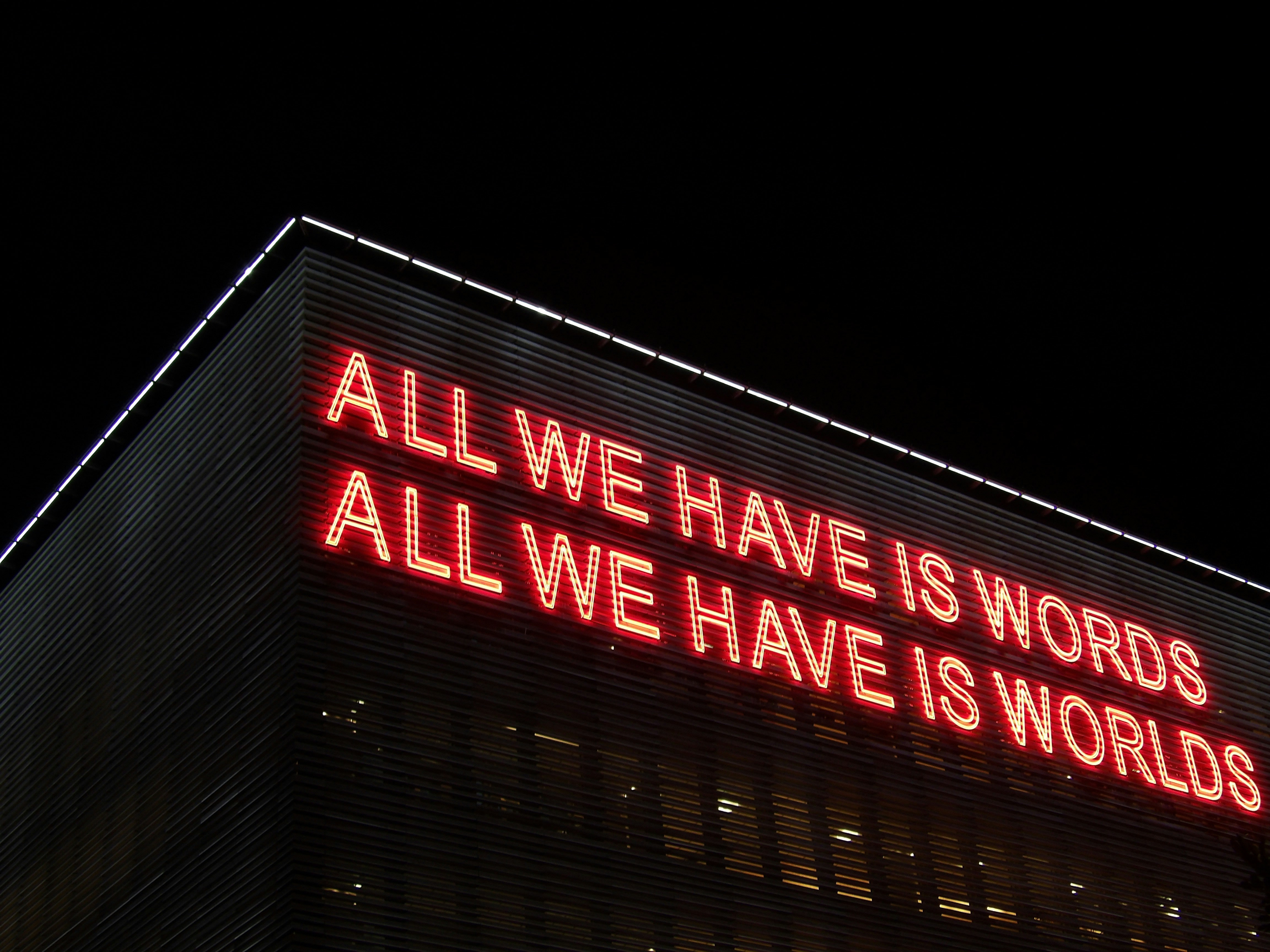
It’s not easy to speak truth to power or stand up when everyone around you to too afraid. And when bearing witness to events that defy reason, words can fail. But that is exactly when leaders must speak, because words fail and that fact must be acknowledged. The act of finding the words is also an invitation to community, collective processing and the first step on building toward a better future.
Further reading:
Allen, Mike and VandeHei, Jim. “Behind the Curtain: Anthropic’s warning to the world.” Axios, 26 Jan. 2026.
Amodei, Dario. “The Adolescence of Technology.” Jan 2026.
DiResta, Renée. “Crisis of Trust 2026: The Retreat Into Insularity.” Agents of Influence, 20 Jan. 2026
Janfaza, Rachel. “Mattering is key to fulfillment. Gen Z isn’t feeling it.” The Up and Up, 27 Jan. 2026.
Taylor, Allison. “Corporations on ICE in Minneapolis: The Ugly, the Bad, and the Good.” Agents of Influence, 14 Jan. 2026
Taylor, Allison. “Fear and Loathing in Corporate America.” Higher Ground, 26 Jan. 2026
Kate - not sure why I haven't seen your Substack until now. I'll be sure to get to your previous posts. This one is such a thoughtful and important piece. The connection you draw between democratic erosion and AI's unchecked acceleration is spot-on.
I'd add one consideration based on some recent conversations with some senior executives. Many who remain silent aren't acting from cowardice. They're genuinely wrestling with competing obligations. In candid conversations, I've found most are deeply thoughtful about these issues, but they're weighing fiduciary duties against personal conviction. They see stakeholder coalitions, including employees, customers, investors, board members, and yes, government, who hold sharply different views, and they worry that speaking out will polarize or fracture the very organizations they're responsible for holding together. In the current environment, the government-as-stakeholder dimension carries particular weight.
I'm not saying this justifies silence indefinitely. You're right that history marks who stood where and when. But effective calls to leadership might acknowledge the real complexity of the environments these leaders are navigating, while making the case, as you do well, that the long-term cost of perpetual silence is higher still.